
Sports Injuries
Spring, Tomball, The Woodlands | Conroe
Call: (281) 369-9166
What's the Difference Between an Ankle Sprain and a Fracture?
Understanding the difference starts with knowing what's actually injured.
An ankle sprain happens when the ligaments: the tough bands of tissue connecting your bones: get stretched or torn. This usually affects the lateral ligaments on the outside of your ankle.
An ankle fracture means one or more bones in your ankle joint have cracked or broken. This can range from a hairline stress fracture to a complete break requiring surgery.
Ankle Sprain or Fracture
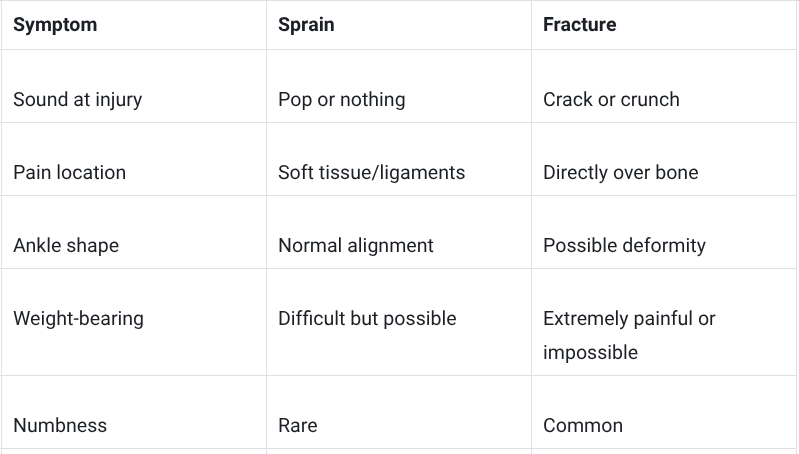
If you're experiencing any signs from the fracture column, seek evaluation immediately.
How to Tell if You Sprained or Fractured Your Ankle
While only imaging can give you a definitive answer, certain signs can point you in the right direction.
Signs that suggest a sprain:
A popping sound at the moment of injury
Pain concentrated around the outside of your ankle (near the ligaments)
Swelling that develops over several hours
Some ability to bear weight, though it's painful
Ankle looks swollen but maintains normal alignment
Signs that suggest a fracture:
A cracking or crunching sound when injured
Sharp pain directly over the bone
Rapid, intense swelling and bruising
Visible deformity or misalignment of the ankle
Numbness or tingling in your foot
Inability to put any weight on your foot


Understanding Sprain Severity Grades
Not all ankle sprains are created equal. Knowing your grade helps you understand your recovery timeline.
Grade I (Mild)
Ligaments are slightly stretched
Minimal swelling and tenderness
You can still walk and bear weight
Recovery: 1-2 weeks
Grade II (Moderate)
Partial tear of the ligament
Moderate swelling and bruising
Limited range of motion
Recovery: 4-6 weeks
Grade III (Severe)
Complete ligament rupture
Severe swelling and instability
Cannot bear weight without significant pain
Recovery: 8-12 weeks (may require immobilization)
Fractures typically require 6-8 weeks minimum for bone healing, followed by physical therapy to restore strength and mobility.
When to See a Podiatrist for Your Ankle Injury
Don't wait and wonder. Seek professional evaluation if you experience:
Severe pain localized over the bone
Visible deformity or unusual ankle angle
Inability to bear weight on your foot
Numbness or tingling sensations
Swelling that doesn't improve after 48 hours
Pain that worsens instead of gradually improving
Even if your symptoms seem "mild," an evaluation can catch problems early: before they become chronic issues that follow you for years.
Athletes in Spring, Tomball,The Woodlands, Conroe and nearby areas in Texas trust our team for accurate diagnosis and compassionate care. We understand what it means to love your sport. We'll help you get back to it safely.
For more information on common foot and ankle conditions we treat or signs you should see a podiatrist, explore our blog resources.

Take the Next Step for Your Ankle
That ankle injury isn't going to diagnose itself. And the longer you wait, the more complicated recovery can become.
Whether you're dealing with a nagging sprain that won't quit or you're worried about a possible fracture, we're here to help.
Schedule an appointment with Stepwise Foot And Ankle today. Let's get you the answers you need and create a recovery plan that gets you back to doing what you love.